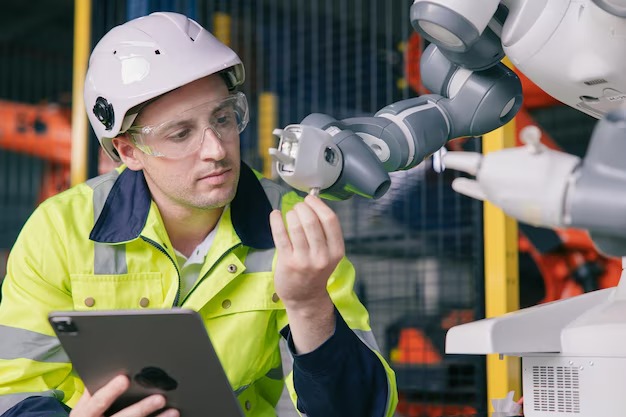
Quick Answer: Industrial robotic inspection services in BC deploy unmanned platforms including ROVs, pipe crawlers, magnetic hull inspection robots, and aerial drones to inspect process equipment, storage tanks, pipelines, marine infrastructure, and confined spaces without human entry into hazardous environments. They are used in mining, forestry, water utilities, port operations, and energy sectors across British Columbia. The core value is inspection access in locations where human entry is slow, dangerous, or not permitted under WorkSafeBC regulations.
The case for industrial robotic inspection is not complicated. WorkSafeBC incident data shows that inspection and maintenance activities in confined spaces and at-height or underwater locations account for a disproportionate share of serious workplace injuries in BC industry. And the cost of conventional inspection, once you add up confined space entry procedures, commercial diver mobilization, scaffolding, or dewatering, is substantial.
Robotic platforms change that calculus in specific, well-defined ways. Industrial robotic inspection services in BC do not make all inspection cheaper or faster. They make specific inspection tasks safer, more thorough, and better documented when the asset is underwater, inside a hazardous atmosphere, or structurally inaccessible by conventional means.
This guide is for BC asset managers, facility engineers, and procurement teams evaluating whether robotic inspection is the right approach for their specific infrastructure. The answer is usually situational, and knowing the situations where it clearly wins helps focus the evaluation.
The Four Conditions That Make Robotic Inspection the Right Call
Rather than approaching robotic inspection as an industry category, it is more useful to think of it as a set of conditions. When these conditions are present, robotic inspection consistently outperforms conventional alternatives.
Condition 1: The Space Has Atmospheric or Engulfment Hazard
Any inspection environment that requires confined space entry procedures under WorkSafeBC Part 9 is a strong candidate for robotic inspection. This includes wet wells, covered reservoirs, process tanks, chemical storage vessels, and utility vaults. Robotic platforms eliminate the worker exposure to oxygen-deficient, toxic, or flammable atmospheres while delivering equivalent or superior documentation quality compared to human visual inspection.
Condition 2: The Asset Is Underwater
Commercial diver inspection is a proven method with a strong safety record, but it carries real constraints. Depth, visibility, water temperature, current velocity, and tidal windows all limit when and how long divers can work. In BC, the Fraser River alone is essentially uninspectable by optical methods for large portions of the year due to turbidity. ROV inspection combined with multibeam sonar works in these conditions where diver inspection cannot.
Condition 3: The Structure Cannot Be Dewatered or Taken Offline
A water treatment plant cannot take its primary reservoir offline for inspection during peak demand. A hydroelectric facility cannot dewater a turbine intake during generation season. A port terminal cannot shut down a berth for multiple days for a diving inspection program. In-service inspection using robotic platforms allows condition assessment without operational disruption, which for critical infrastructure can represent savings that dwarf the inspection cost itself.
Condition 4: Documentation and Data Quality Are Critical
When inspection findings will be used for regulatory reporting, engineering fitness-for-service assessments, or insurance purposes, the documentation quality of robotic inspection is a genuine advantage. HD video archives, GPS-referenced defect registers, 3D models, and quantitative NDT data produce an audit trail that is significantly more defensible than a diver’s written field notes and limited underwater photography.
BC Industry Sectors and Their Primary Robotic Inspection Applications

Mining and Tailings
BC’s mining sector, from copper porphyry deposits in the Highland Valley to coal operations in the northeast, operates tailings storage facilities, process water ponds, and water management structures that require inspection under the BC Mines Act and associated dam safety regulations. Tailings impoundment inspection using robotic platforms assesses dam face condition, seepage zones, and toe drainage systems without requiring personnel entry into hazardous proximity of the tailings mass.
Pulp and Paper
BC’s pulp mills operate digesters, brown stock washers, bleach plant vessels, and effluent treatment systems that require inspection under BLRBAC and TAPPI standards. Internal vessel inspection using confined space robots eliminates entry into caustic, acidic, or hot environments during scheduled maintenance windows, reducing both safety risk and turnaround time during mill outages.
LNG and Petroleum Facilities
Storage tanks, marine loading arms, subsea pipelines, and offshore structures in BC’s LNG sector require inspection under API 653 (storage tanks), NACE standards (corrosion control), and Transport Canada marine regulations. Robotic tank inspection using magnetic crawlers with UTM arrays can inspect tank floors and walls without manned entry into flammable or oxygen-enriched atmospheres.
Municipal Infrastructure
Across BC’s municipal sector, from Metro Vancouver to Kelowna to Prince George, aging water and wastewater infrastructure requires increasing inspection frequency as assets approach or exceed design life. Pipe inspection robots and reservoir inspection ROVs are standard tools in municipal asset management programs, accepted by regulators and funded through infrastructure maintenance budgets.
What Industrial Robotic Inspection Cannot Do
Any honest assessment of this technology has to acknowledge its limits. Robotic inspection is an assessment and documentation tool, not a maintenance platform.
Physical intervention is limited. While some ROV platforms carry manipulator arms capable of simple tasks (turning a valve, installing a small component), the range of physical work a robot can perform underwater is narrow compared to a commercial diver. If the scope requires significant manual work, robotic inspection may precede but cannot replace a diving crew.
Tactile assessment is not replicable. An experienced commercial diver running a hand along a concrete surface can feel hairline cracks that cameras and sonar miss. The haptic dimension of inspection has no current robotic equivalent. For critical structural assessments, diver confirmation of robotic findings is sometimes required by engineers or regulators.
Complex geometry requires careful platform selection. Pipe inspection robots that work well in straight large-diameter mains may not navigate small-radius bends or diameter transitions. ROVs in enclosed spaces need sufficient volume to maneuver. Platform selection must match the specific geometry of the asset being inspected.
Frequently Asked Questions
Q: What are industrial robotic inspection services in BC?
Industrial robotic inspection services in BC use unmanned robotic platforms to inspect industrial infrastructure including storage tanks, pipelines, vessels, marine structures, and confined spaces. They operate in environments where human entry is hazardous or restricted, delivering video, sonar, and NDT data for engineering and regulatory purposes.
Q: Which BC industries use industrial robotic inspection most?
Mining, pulp and paper, LNG and petroleum, municipal water and wastewater utilities, port and marine terminal operators, and hydroelectric facilities are the primary users of industrial robotic inspection services in British Columbia. Any industry with underwater, confined space, or at-height infrastructure requiring periodic condition assessment is a potential user.
Q: Is industrial robotic inspection more expensive than conventional inspection?
The unit cost of robotic inspection mobilization is often comparable to or higher than conventional inspection for simple, accessible assets. The cost advantage appears in the avoided costs of confined space entry procedures, dewatering, scaffold, diver mobilization, and operational downtime. For complex, hazardous, or in-service assets, robotic inspection is typically lower total cost when all factors are included.
Q: What standards govern robotic inspection in BC?
Robotic inspection in BC references applicable standards based on asset type: CSA S6 for bridge infrastructure, NACE SP0169 for cathodic protection, API 650/653 for storage tanks, ASME B31 series for pipelines, and client-specified standards for utility infrastructure. WorkSafeBC OHS Regulation governs the safety aspects of robotic deployment, particularly in confined space and marine environments.
Q: How do I evaluate whether robotic inspection is right for my BC facility?
Start by identifying which assets require inspection and what access, atmospheric, and operational constraints exist. If any inspection scope involves confined spaces with atmospheric hazard, submerged or flooded structures, depths beyond safe diver range, or assets that cannot be taken offline, robotic inspection is worth evaluating. Request a scope-specific proposal from providers with demonstrated BC infrastructure experience and ask for examples of comparable projects.
