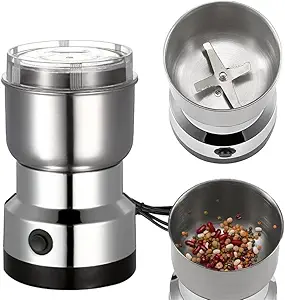
Most people don’t think twice about their herb grinder until it breaks. Then they go buy the cheapest one they can find, and the whole cycle repeats. I’ve been there. After going through three plastic grinders in a single year, I finally switched to a stainless steel model and genuinely wish I’d done it sooner.
The difference isn’t subtle.
A good herb grinder does more than just chop herbs. It gives you a consistent grind, preserves the potency of whatever you’re grinding, and holds up to daily use without warping, cracking, or leaving plastic bits in your material. That last point matters more than people realize.
Plastic vs. Stainless Steel: The Real Comparison
Plastic grinders are fine for occasional use. That’s about the most generous thing I can say about them.
They wear down fast. The teeth start to dull after a few months of regular use, and once that happens, you’re not grinding anymore, you’re just mashing. Stainless steel doesn’t do that. The teeth stay sharp, the threading holds up, and the whole thing feels solid in your hand from day one to year three.
The best stainless steel grinder also runs cleaner. No off-gassing, no weird plastic taste transferring into your herbs, no structural weakening from moisture. If you’re grinding anything with essential oils or fine particles, that material integrity actually matters.
Weight is another thing. Stainless steel grinders have a heft to them that makes grinding easier. You use less force, the mechanism does more of the work, and you get a finer, more even consistency.
What to Actually Check Before Buying
Not every stainless steel grinder is built the same. Some are thin-walled, some have mediocre teeth geometry, and some look premium in product photos but feel hollow the moment you pick them up.
Here’s what I’d look at:
Tooth Count and Shape More teeth don’t always mean a better grind. Diamond-shaped teeth cut cleaner than rounded ones, and spacing matters as much as count. A well-spaced 28-tooth design will outperform a poorly designed 40-tooth one.
Number of Chambers Basic two-piece grinders grind and collect in the same chamber. Three-piece models add a separate collection chamber. Four-piece designs go one step further with a kief screen that catches fine particles separately. For herb grinders specifically, the four-piece setup gets you the most out of every grind.
Threading This is where cheap stainless steel grinders fall apart, literally. Strip-prone threading is a manufacturing shortcut. Look for smooth-start threading with some depth to it. If the lid screws on with just two turns, that’s a red flag.
Magnet Lid Closure A strong magnet in the lid keeps everything sealed during grinding. Weak magnets let the lid pop open mid-grind, which is annoying at best and wasteful at worst. Test it if you can, or check reviews specifically mentioning the magnet strength.
Size: Bigger Isn’t Always Better
Grinders come in roughly three size ranges: 40mm (pocket-sized), 55-63mm (standard), and 75mm+ (large batch).
For daily personal use, 55-63mm hits the sweet spot. You get a big enough grinding surface to process a decent amount without needing multiple sessions, but the grinder stays portable enough to carry without it being a whole thing.
Large grinders are better if you’re grinding for multiple people or cooking with herbs in volume. Smaller ones are good for travel but require more grinding passes for the same output.
How to Keep a Stainless Steel Grinder Running Well
One thing people get wrong is maintenance. Stainless steel doesn’t rust under normal conditions, but buildup inside the grinder will eventually affect performance if you let it go.
I clean mine every two to three weeks with a small brush and a quick rinse. Every month or so, I’ll do a full disassemble and scrub. For stubborn residue stuck to the screen or teeth, isopropyl alcohol on a cotton swab works better than anything else I’ve tried.
Don’t put it in the dishwasher. The high heat and detergent will dull the threading over time, and on cheaper stainless steel models it can cause discoloration. Hand washing is a two-minute job. Just do it.
The Kief Catch Is the Feature People Sleep On
If you haven’t used a four-piece herb grinder with a kief catcher, you don’t know what you’re missing.
Kief is the fine powder that collects at the bottom chamber after grinding. It’s the most potent part of many herbs, and a standard two-piece grinder just mixes it back in or sticks it to the walls. A kief screen separates it automatically.
After two or three weeks of regular grinding, you’ll have a noticeable amount collected at the bottom. That’s not a small thing if you’re grinding daily.
One Thing to Watch Out For
Some grinders marketed as “stainless steel” are only partially stainless. The body might be 304-grade steel but the screen is a low-quality mesh that bends or tears quickly.
Before buying, check whether the product listing specifies the full build material. A best stainless steel grinder worth buying will use consistent-grade materials throughout, not just in the parts you see.
The Short Answer
If you’re grinding herbs more than a few times a week, plastic is the wrong tool. It wears out, it contaminates, and it stops performing long before you’d expect it to.
A stainless steel grinder costs more upfront. That’s true. But it’ll outlast four or five cheap replacements, and the quality of your grind will be noticeably better from day one.
Get the right size, check the threading and teeth, make sure the kief screen is actually quality mesh, and you won’t need to buy another grinder for years.
That’s about as simple as it gets.
