
Modern warehouses handle thousands of pallets, cartons, and shipments every day. As order volumes increase, manually measuring freight can become slow, inconsistent, and expensive. A pallet dimensioner machine provides a practical way to automate dimensional measurement while supporting faster warehouse operations. By capturing the length, width, and height of palletized goods, this technology can help businesses create more accurate shipment records and improve how available space is used.
Dimensional information has become increasingly important in logistics because transportation costs, storage requirements, and loading decisions often depend on the physical size of freight. Instead of relying on manual measurements and handwritten notes, warehouse teams can use automated measurement equipment to capture reliable data during normal handling processes.
Understanding Automated Pallet Measurement
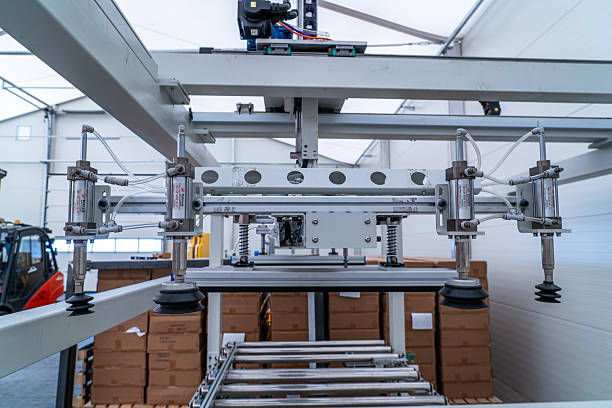
A pallet dimensioner machine is designed to measure the external dimensions of palletized freight using sensors, cameras, scanners, or combinations of these technologies. Depending on the system, measurements can be captured while a pallet is stationary or as it moves through a designated scanning area.
The collected information may be integrated with warehouse management, transportation management, inventory, or shipping software. This creates a connected workflow in which physical measurements become usable digital data.
Why Dimensional Accuracy Matters
Even small measurement errors can create problems when freight is transported or stored. Incorrect dimensions may affect shipment pricing, trailer utilization, warehouse slotting, and load planning. Automated measurement reduces the reliance on estimates and gives operators a consistent method for recording freight dimensions.
Key Benefits of a Pallet Dimensioner Machine
Businesses adopt automated dimensioning technology for several operational reasons. The equipment can improve measurement consistency while reducing repetitive manual work. It can also help employees spend more time on activities that directly contribute to warehouse throughput.
Some common advantages include:
- Faster measurement of palletized shipments.
- More consistent dimensional data.
- Reduced manual measuring and recording.
- Better visibility for shipping and warehouse planning.
When integrated correctly, a pallet dimensioner machine can become part of a broader warehouse automation strategy. Instead of functioning as an isolated measurement device, it can contribute information to multiple stages of the logistics process.
Improving Shipping and Freight Planning
Shipping departments need accurate information before freight leaves a facility. Dimensions can influence carrier selection, transportation pricing, trailer capacity, and loading arrangements. A reliable measurement process therefore supports better decision-making.
A pallet dimensioner machine can capture measurements before shipment information is finalized. This can reduce the possibility of entering incorrect dimensions into shipping systems and can make the documentation process more efficient.
Supporting Better Trailer Utilization
Transportation providers aim to maximize available trailer and container space without compromising safety. Accurate pallet dimensions help planners understand how much room each shipment requires.
When dimensional information is captured automatically, planners can work with more dependable data when arranging loads. Over time, this can support better utilization of transportation capacity and reduce unnecessary space gaps.
Reducing Warehouse Labor Pressure
Manual measurement requires employees to position measuring tools, record readings, enter information into software, and sometimes repeat the process when measurements appear questionable. These activities may seem minor individually, but they can consume considerable labor across a busy facility.
Using a pallet dimensioner machine allows the measurement process to become more streamlined. Employees can focus on material movement, quality checks, order preparation, and other responsibilities while automated equipment handles dimensional capture.
Creating More Consistent Workflows
Standardization is another important advantage. Different employees may interpret irregular pallet shapes or overhanging loads differently when measurements are taken manually. Automated systems provide a repeatable process based on the equipment’s configured measurement method.
This consistency can be particularly useful for large facilities where many workers and shifts handle freight.
Integrating Dimensioning With Digital Systems
The greatest value of automated dimensioning can emerge when measurement information connects with existing software. Warehouse systems can use dimensional data for inventory records, shipping documentation, freight planning, and reporting.
A pallet dimensioner machine may therefore support more than physical measurement. It can become a data collection point within a connected warehouse environment.
Integration requirements vary by facility, so businesses should consider communication protocols, software compatibility, data formats, and installation requirements before selecting equipment.
Choosing the Right Dimensioning Solution
Not every warehouse has identical measurement requirements. Businesses should evaluate the size and type of pallets they handle, measurement speed, environmental conditions, available floor space, and desired integration capabilities.
A facility processing high shipment volumes may prioritize throughput, while another operation may place greater emphasis on measurement precision or integration with existing systems.
The right pallet dimensioner machine should fit the operational workflow rather than force employees to create an entirely new process around the equipment.
Conclusion
Automated measurement is becoming an important part of efficient warehouse management. By capturing freight dimensions quickly and consistently, a pallet dimensioner machine can help businesses improve shipping preparation, labor efficiency, space planning, and data quality. When paired with suitable software and an appropriate workflow, dimensioning technology can provide a strong foundation for more connected and efficient logistics operations.
