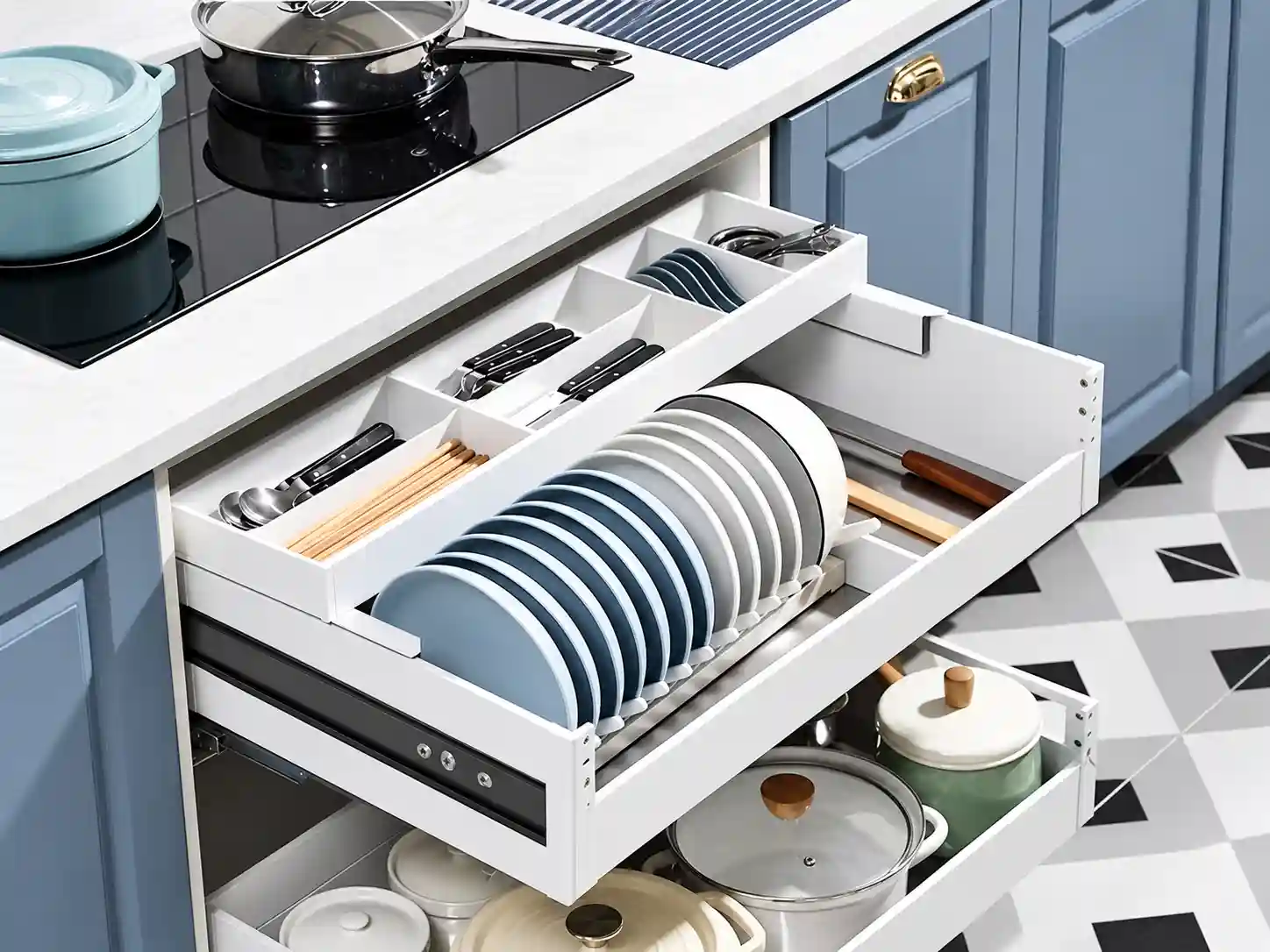
Ball-bearing slides are among the most familiar pieces of drawer hardware. They sit on the sides of the drawer, use rows of small steel balls to carry the motion, and have been the default choice for everything from kitchen cabinets to office furniture for a long time. Because they are so common, it is easy to treat them as a commodity and buy on price alone. That is where trouble starts, because two slides that look identical can behave very differently once they are installed and loaded.
If you build furniture or supply the people who do, a little care at the buying stage saves a lot of rework later.
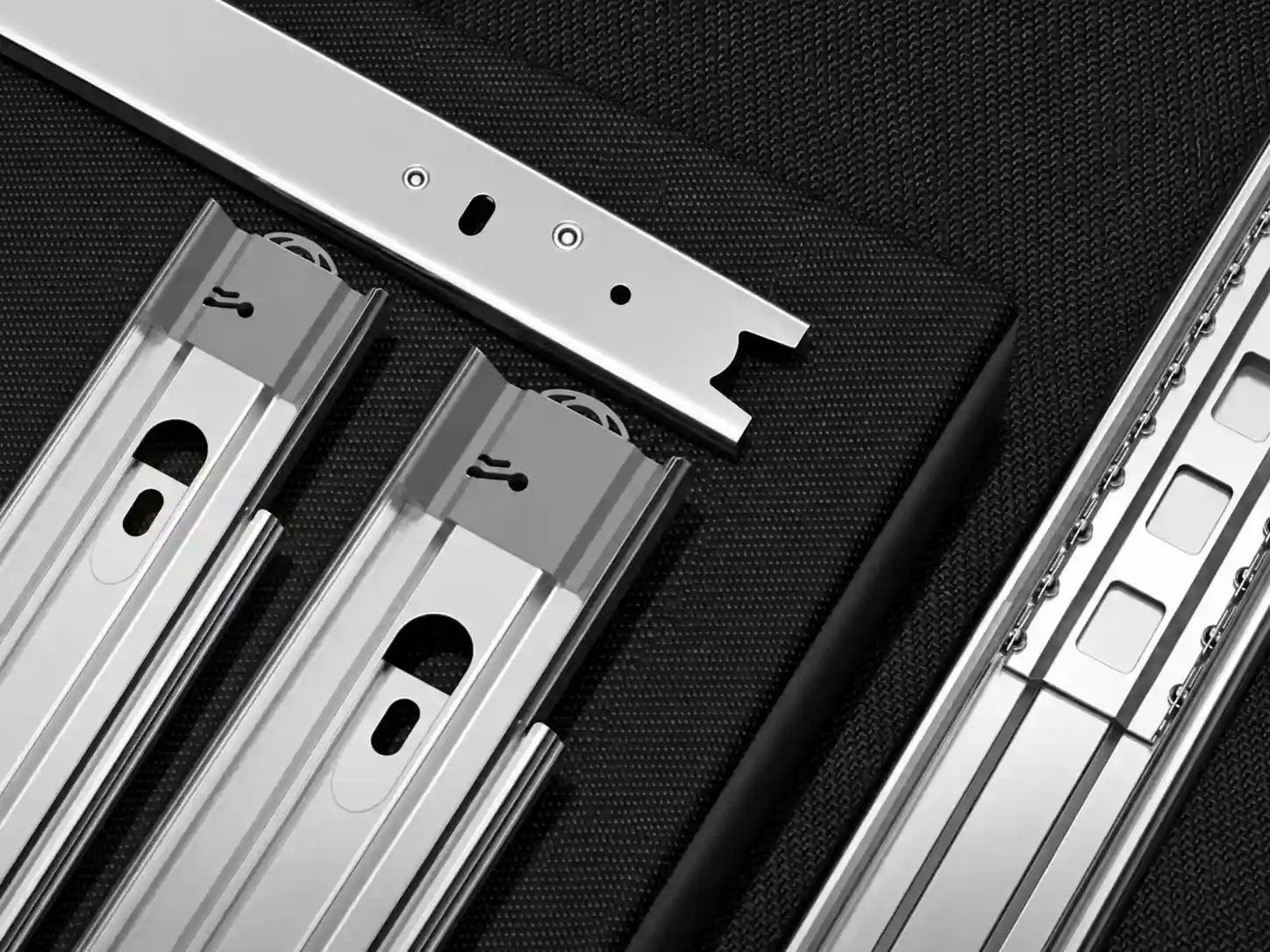
How a ball-bearing slide works
A ball-bearing slide has two or more metal channels that move against each other. Between the channels, small steel balls roll in tracks, which keeps friction low and lets the drawer glide. The quality of that motion depends on several things working together: the precision of the channels, the quality of the balls and their cages, the finish on the metal, and how well everything is assembled.
When those elements are right, the drawer feels smooth and stable. When they are not, you get grinding, side-to-side wobble, or a drawer that sticks partway through its travel.
What separates a good slide from an average one
The differences are often subtle in a catalog photo but obvious in use. Look at these points when you evaluate samples:
- Smoothness along the full travel. Open and close the drawer slowly and listen for gritty spots or hesitation.
- Side stability. Gently push the open drawer from side to side. A little movement is normal, but a lot suggests loose tolerances.
- Consistency within a pair. Left and right slides should feel the same. If they differ, the drawer will twist.
- Behavior under load. A slide that feels fine empty may sag or bind when the drawer is filled.
- Finish and edge quality. Rough edges or uneven coating are warning signs about overall care in manufacturing.
Test with realistic loads
An empty drawer hides most problems. Install samples in your own drawer boxes and load them the way customers will, using the weight and placement they are likely to use, which is often uneven and crowded toward the front. Open and close the drawer many times and watch for changes. A sample that feels perfect at first but loosens after a few dozen cycles tells you something important.
Use the same routine for every supplier you compare, with the same drawer, the same loads, and the same method. Otherwise you end up comparing your setup instead of the slides.
Why consistency matters more than a single good sample
Anyone can send one good sample. What you are really buying is the hundredth and the ten-thousandth slide in the shipment. If the product varies from unit to unit or batch to batch, your assembly line pays for it with adjustments, rejects, and customer complaints.
Ask each supplier how they keep quality consistent across batches and how they handle changes in materials or processes. Request samples from different production runs if you can. A supplier who answers these questions clearly and specifically has probably thought about them before.
Standard solutions and custom requirements
Many projects work well with standard slide solutions. They are proven, quick to source, and easy to reorder. If your drawers follow common dimensions and your loads are typical, a standard option may cover everything.
Custom requirements come up when your drawers have unusual sizes, when a project needs particular behavior, or when you are building a branded line. SOTAL describes its range as running from standard drawer slide solutions to flexible OEM/ODM requirements, so both routes sit within the same kind of supplier. If you suspect you will need customization, raise it early, since it affects timing, quantities, and the information you will need to provide.
Look at how the supplier works
The product is only part of the picture. How a supplier communicates and plans production shapes your whole experience. Pay attention to:
- How quickly and clearly questions are answered
- Whether answers from different people agree
- How openly they discuss limits as well as strengths
- Whether they can explain how they plan production as volumes grow
SOTAL says it combines practical engineering, consistent quality, and responsive service to support long-term B2B partnerships, and that it helps customers source the right products with clear communication and stable production planning. Whether any supplier lives up to such a description is something you can test through sampling and a small first order, and it is wise to do exactly that.
Working directly with a factory also shortens the path between your question and the people who build the product. If an issue shows up in sampling, the engineers can examine it instead of the message passing through several layers.
Prepare your side of the project
Suppliers can only match what you describe. Before asking for quotes, gather:
- Drawer box dimensions and construction
- Cabinet clearances
- Typical and maximum loads
- Estimated order quantities and whether you plan repeat orders
- Finish and packaging requirements
A clear specification gets faster, more accurate replies and makes quotes easier to compare. Send the same sheet to every supplier.
Start small, then scale
A trial order is the cheapest way to learn how a supplier performs. Use it to check product quality, communication, and delivery before committing to a larger run. If it goes smoothly, expand with confidence. If it does not, you found out at low cost.
Keep the approved sample safe and labeled. When bulk shipments arrive, compare a few units against it. If something differs, you have a concrete reference to discuss.
Where to begin
If you are comparing ball-bearing slides in China, start by writing down your specifications, request samples for real-world testing, and judge each supplier by how clearly they communicate and how they plan production.
The takeaway
Ball-bearing slides are familiar, but familiarity is not the same as quality. Test samples under realistic loads, check consistency across units and batches, choose between standard and custom with care, and favor suppliers who communicate clearly and think long term. Do that and a routine purchase becomes a dependable foundation for every drawer you build.
