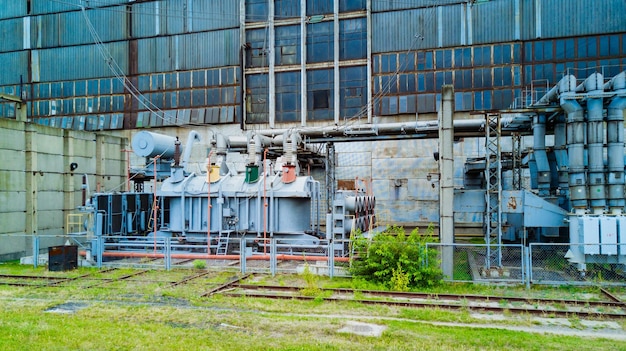
Manufacturing plants operate on tight margins where every hour of unplanned downtime translates directly into financial loss. A production line that shuts down unexpectedly because of a grid outage does not simply pause — it creates a cascade of consequences that includes scrapped materials, missed shipments, equipment damage from abrupt shutdowns, and the labor cost of restarting complex processes. For manufacturing operations of any significant scale, reliable generators are not an optional convenience. They are a core operational requirement.
The Unique Power Continuity Challenges Manufacturing Plants Face
Unlike commercial office buildings or retail environments, manufacturing plants carry electrical loads that are fundamentally different in character. Large motor loads for production equipment, compressed air systems, and material handling machinery create starting current surges that can be many times higher than running current. HVAC systems in manufacturing environments serve both worker comfort and process control functions that cannot be interrupted without affecting product quality. And in facilities with continuous processes — chemical, food processing, or precision manufacturing — an abrupt shutdown can mean damaged equipment and lost product batches in addition to the production downtime itself.
Generators for manufacturing plants must therefore be sized not just for the running load but for the peak demand created by motor starting sequences. The transfer switch configuration must be engineered to handle the transition without nuisance tripping from the surge current that appears at the moment backup power picks up the load. And the runtime capacity must be sufficient for the typical outage duration in the facility’s geographic area.
What Proper Generator Sizing Looks Like for Manufacturing Applications
Getting generator sizing right for a manufacturing plant requires a more rigorous analysis than simply adding up the nameplate wattages of all connected equipment:
- Running load analysis: Total wattage of all equipment under normal operating conditions
- Motor starting load analysis: Peak current demand during motor start sequences, which can be two to six times running current
- Derating for altitude and temperature: Generator output decreases at higher altitudes and elevated ambient temperatures
- Essential versus non-essential loads: Determining which loads the backup system must support and which can be shed during an outage
- Runtime requirements: Fuel storage sizing to match the facility’s expected maximum outage duration
Why Manufacturing Plants Benefit from Native-Owned Infrastructure Partnerships
For tribal manufacturing facilities and commercial manufacturers participating in diversity supplier programs, working with a Native American-owned infrastructure partner provides specific procurement value. Catawba Power and Lighting holds Native-owned business status and offers tribal preference procurement advantages that help partners meet supplier diversity requirements in federal contracts and tribal economic development programs.
Beyond the procurement credentials, the company’s infrastructure-level expertise means manufacturing clients get technical guidance on manufacturing plants power system design alongside product sourcing. That combination prevents the common mistakes — undersized systems, incompatible transfer switches, inadequate fuel storage — that compromise backup power performance in demanding industrial environments.
Generator Features Most Valuable in Manufacturing Environments
- Automatic transfer with load sequencing: Prevents motor starting surge overloads during transition
- Low total harmonic distortion output: Protects sensitive process control and measurement equipment
- Extended fuel storage capability: Supports multi-day runtime without fuel resupply
- Remote monitoring and diagnostics: Allows facility teams to confirm system status without on-site inspection
- Weatherproof enclosures rated for industrial environments: Maintains reliability in extreme ambient conditions
Catawba’s Role in Manufacturing Power Infrastructure
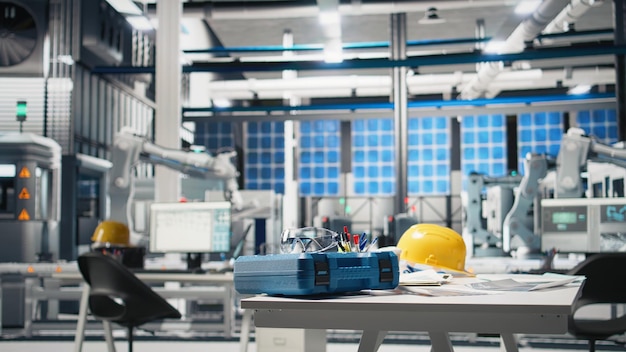
Catawba Power and Lighting serves manufacturing and industrial clients with the same infrastructure partnership approach it brings to tribal governments, healthcare facilities, and commercial developers. The company’s nationwide direct-ship distribution capability means manufacturing operations across different geographic locations can be served through a single procurement relationship. Strategic manufacturer partnerships provide access to commercial and industrial generator systems at competitive pricing, with technical support throughout the specification process.
The company’s mission aligns with the long-term infrastructure goals of the manufacturing clients it serves: reliable equipment, competitive sourcing, and a partner who stays engaged from specification through deployment.
Conclusion
Manufacturing plants cannot afford backup power systems that underperform when they are actually needed. Reliable generators, correctly sized for industrial motor loads and configured with appropriate transfer switching and fuel storage, are the foundation of production continuity planning. Catawba Power and Lighting brings the technical expertise and Native-owned procurement advantages to help manufacturing operations source and deploy backup power infrastructure that genuinely meets their operational demands.
